
Swimming with Fur Seals
Narooma Seals – Swimming with Fur Seals at Barunguba Montague Island
Introduction: Narooma’s Famous Fur Seals
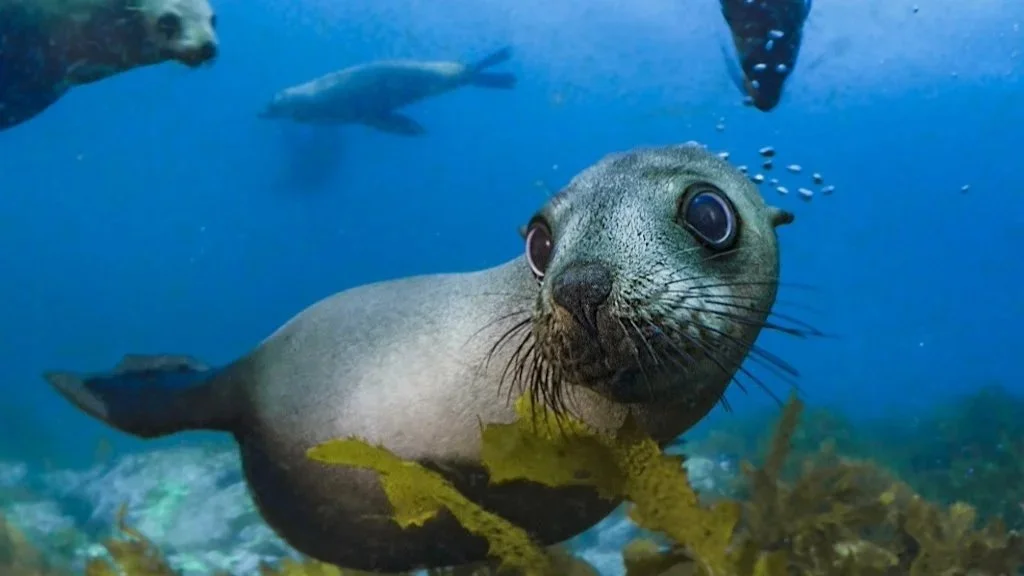
Australian Fur Seal at Montague Island
Narooma on the NSW South Coast is home to one of Australia’s most remarkable wildlife experiences: the chance to swim with wild fur seals at Barunguba Montague Island. This small coastal town, tucked between pristine bays and the deep blue Tasman Sea, serves as the gateway to an underwater playground where curious seals glide through crystal clear waters to investigate their human visitors.
Two main seal species call these waters home: Australian fur seals and New Zealand fur seals. During peak seasons, the rocky ledges around Barunguba Montague Island can host over 1,000 animals, creating one of the most impressive seal colonies along the entire Australian coastline. The island sits approximately 7 kilometres offshore from Narooma, reached by a short 20 to 30 minute boat ride across the sparkling ocean.
“The turquoise water is so clear you can see the seals before you even get in – then they torpedo past you, rolling and spinning like they’re putting on a show.”
Whether you’re a seasoned diver or a first time snorkeller hoping to snorkel with the seals, Narooma delivers an experience unlike anything else in New South Wales. This guide covers everything you need to know: how to swim with the seals, tour options, the best time of year to visit, safety considerations, and the remarkable wildlife you’ll encounter beyond the playful fur seals themselves.
Why Narooma is the Best Place to See Seals in NSW
Narooma sits on the South Coast of New South Wales, approximately 5.5 hours’ drive south of Sydney and around 3 hours from Canberra. This location makes it an ideal destination for a long weekend road trip or an extended coastal adventure along the Sapphire Coast.
Barunguba Montague Island is one of the largest offshore islands in NSW, excluding Lord Howe Island, and operates as a protected nature reserve teeming with marine life. The combination of isolation, abundant food sources, and rocky terrain creates perfect conditions for fur seals to thrive year round.
What makes Narooma stand out from other seal viewing locations along the coast comes down to several key factors:
Peak seal populations can exceed 1,000 to 1,800 animals during winter and spring months
Consistently excellent underwater visibility in the sheltered coves around the island
Minimal large shark presence compared to many other coastal regions in Australia
Rocky ledges and tumbled boulders provide ideal haul-out spots for resting seals
Abundant fish populations ensure seals remain well-fed and active in the area
Short 20 to 30 minute boat transfer from Narooma harbour makes half-day trips realistic
The island’s natural habitat offers everything fur seals need: sun-warmed rocks for basking, protected waters for hunting, and enough distance from the mainland to feel secure. Narooma’s harbour provides easy, fast boat access, meaning you can experience wild animals in their element without committing to an entire day on the water.
Seal Species at Barunguba Montague Island
The most common species of seal found at Montague Island is the Australian Fur Seal. New Zealand Fur Seals are also present at Montague Island, but they tend to be more solitary compared to Australian Fur Seals. Australian fur seals are larger and more social, while New Zealand fur seals are slightly smaller and more solitary.
Two fur seal species regularly haul out on Montague Island: Australian fur seals and New Zealand fur seals, the latter sometimes called Long-nosed Fur Seals. While they share the same rocky territory, these species display distinct physical and behavioural characteristics that become apparent once you know what to look for.
Australian Fur Seals are generally the larger of the two species. Mature males can reach up to 2 metres in length and weigh approximately 350 kilograms, with females coming in at roughly one-third of that weight. Their colouring ranges from tan to grey-brown, and they’re highly social creatures. You’ll often spot them lounging together in noisy groups on sun-soaked rock platforms, sometimes piled almost on top of one another. They hold their necks upright while keeping their heads parallel to the ground and move across land by alternating their front flippers in a distinctive swagger.
New Zealand fur seals present a different picture. They’re smaller and darker, often appearing chocolate-brown to almost black when wet. Unlike their social Australian cousins, these seals prefer personal space and tend to rest alone or in small clusters among tumbled boulders rather than on open platforms. They hold their heads vertically when at rest and bound across land with both front flippers moving together rather than alternating.
Quick Species Comparison:
Australian Fur Seals: Larger, lighter coloured, highly social, prefer rock platforms
New Zealand Fur Seals: Smaller, darker, more solitary, prefer boulder fields
Both species: Protected in NSW, recovering strongly since hunting bans
Seasonal abundance shifts throughout the year, with numbers peaking between June and October when over 1,000 individuals often crowd the island’s ledges. Both species breed on islands further south in Bass Strait and Tasmania during summer, which means coastal populations in NSW swell during winter as animals migrate north to forage.
How to Swim with Seals in Narooma
Barunguba Montague Island operates as a protected nature reserve, which means seal swimming is only permitted through licensed tour operators departing from Narooma. Visitors cannot access Montague Island without booking a tour due to its protected status. You cannot simply rock up with your own boat and jump in – all visits must follow strict environmental guidelines designed to protect the seals and their natural habitat.
Booking and Briefing Process
A typical seal swim experience follows a straightforward pattern. You’ll check in at Narooma harbour, receive a comprehensive safety and environmental briefing, then board a fast boat for the journey out to the island. The ride takes between 20 and 30 minutes depending on conditions, often passing dolphins surfing the bow wave along the way.
Standard gear includes a thick wetsuit (typically 5mm or 7mm to handle the sometimes chilly water), mask, snorkel, and fins. Most operators provide everything you need, though hoods and gloves are sometimes offered for extra warmth. Participants can choose between surface snorkelling and scuba diving depending on experience level, with some tours offering combined options.
In-Water Experience
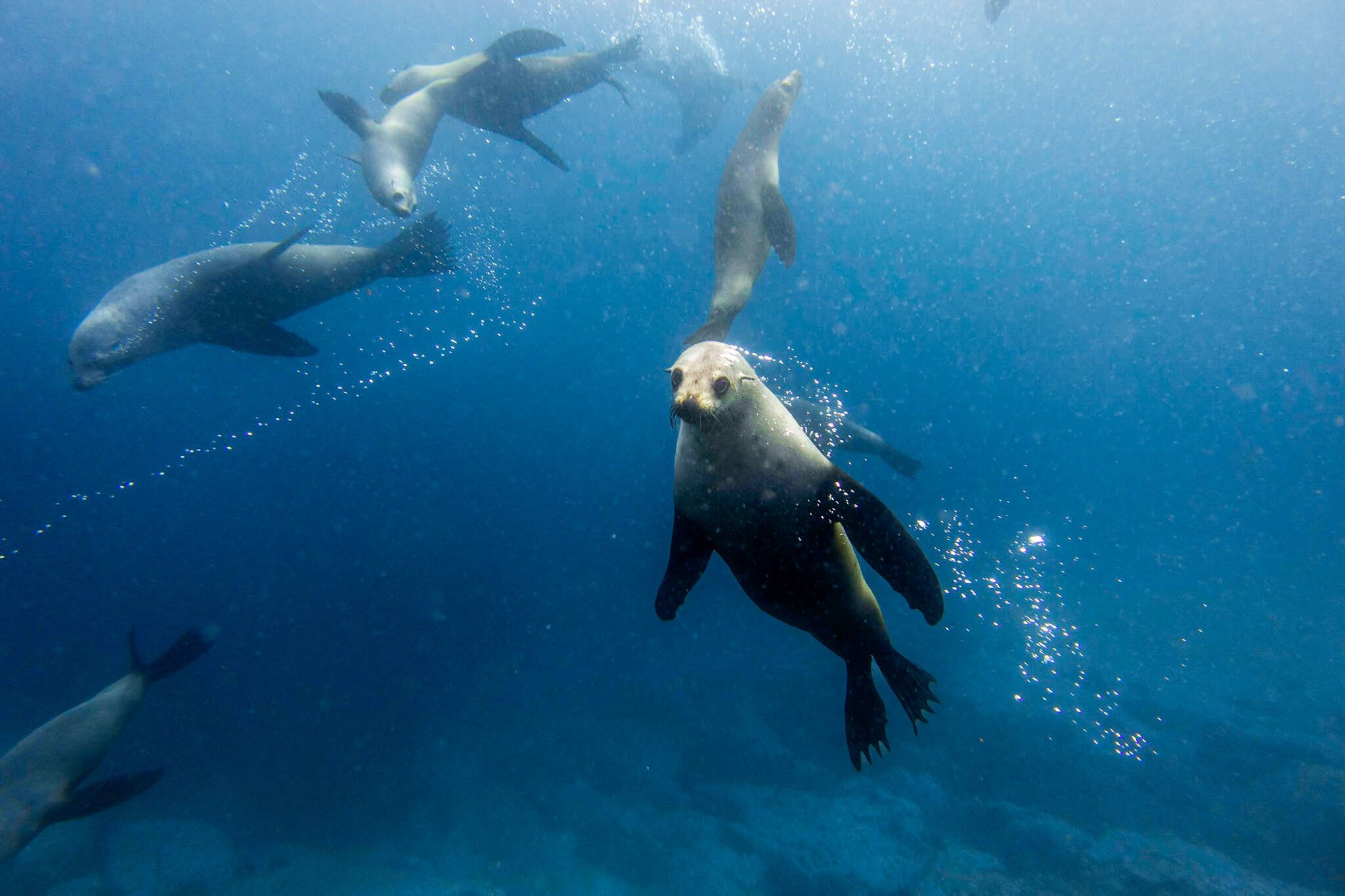
Australian Fur seals Narooma
Once you’re in the water, the magic begins. Seals slide from the rocks and torpedo through the pristine waters, rolling, blowing bubbles, and sometimes mimicking your movements. Dive masters and guides often describe seals playing chicken – rushing towards swimmers with mouths open before veering away at the last second, or sneaking up from behind to give fins a playful tug.
Step-by-Step Flow of a Typical Narooma Seal Swim:
Arrive at Narooma harbour 30 to 45 minutes before departure
Check in, get fitted for wetsuit and snorkel gear
Receive safety briefing covering seal behaviour and environmental guidelines
Board the boat for 20 to 30 minute transfer to Barunguba Montague Island
Skipper anchors in a sheltered cove near active seal colonies
Enter water via ladder or giant stride under guide supervision
Spend 60 to 90 minutes swimming with seals (with breaks on boat if needed)
Return cruise past lighthouse and rocky ledges for photos
Arrive back at Narooma harbour
Confident swimmers get the most from this amazing experience, but buoyancy aids like pool noodles are typically available for kids, nervous swimmers, or anyone who wants extra support in the water.
Swimming with Seal Pups
Seal pups are most visible during the warmer months, with January and February offering particularly good chances of encountering playful youngsters in sheltered coves. These curious animals haven’t yet developed the wariness of adults and often dart out to investigate snorkellers before quickly retreating to safety.
Pups tend to stay close to the rocks or in the shallows, practising their swimming skills and building confidence. They’re endlessly entertaining to watch – all energy and curiosity without the size or power of mature seals.
Etiquette Tips for Seal Pup Encounters:
Never chase, corner, or attempt to touch pups
Give them space if they move away from you
Let pups initiate interaction rather than pursuing them
Stay calm and move slowly to avoid startling young animals
Follow guide instructions about which areas to avoid near resting and nursing seals
Guides choose coves where pup encounters are common while maintaining respectful distance from areas where mothers are nursing or pups are resting out of the water.
Is it Safe and Ethical to Swim with Seals?
Swimming with seals at Narooma is considered both safe and ethical when conducted under licensed supervision and within NSW National Parks guidelines. These aren’t trained animals in an enclosure – they’re wild animals choosing to interact with visitors in their own ocean environment.
The key to ethical seal encounters lies in letting the seals control the interaction. Responsible operators stress several non-negotiable rules: don’t touch, chase, or feed seals; keep a respectful distance from animals resting on the rocks; and always follow crew instructions. Seals are powerful creatures with strong jaws, so while negative interactions are rare, guests should avoid sudden or aggressive movements.
Do’s and Don’ts for Safe, Low-Impact Seal Encounters:
Do let seals approach you rather than chasing them
Do stay with your guide and follow all briefing instructions
Do move calmly and avoid sudden splashing movements
Don’t touch or attempt to grab passing seals
Don’t corner seals against rocks or block their exit routes
Don’t feed seals or bring any food into the water
Don’t approach seals hauled out on rocks closer than the legal minimum distance
Operators minimise engine time near colonies, manage group sizes in the water, and ensure all interaction remains seal-initiated. This approach protects both the wildlife and the long-term viability of these encounters.
Post-Swim Activities
After your swim, the return cruise often includes a slow loop past the lighthouse and rocky ledges where seals bask in the sun, offering excellent photo opportunities before heading back to shore.
Best Time of Year to See and Swim with Narooma Seals
Seals are present at Barunguba Montague Island year round, but different seasons bring different highlights. Your ideal visit timing depends on whether you prioritise warm water, peak seal numbers, pup encounters, or the chance to combine your seal swim with whale watching.
What You’ll See by Season:
Summer (December to February): Warmest water, seal pups, excellent visibility, peak crowds
Autumn (March to May): Calm conditions, confident older pups, fewer tourists
Winter (June to September): Maximum seal numbers, cooler water, early whale migration
Spring (September to November): Active seals plus whales, good visibility, ideal for combo trips
Weather and swell can affect departures at any time of year. Allow a flexible day or two in your itinerary to account for potential rescheduling – the ocean doesn’t always cooperate with holiday plans.
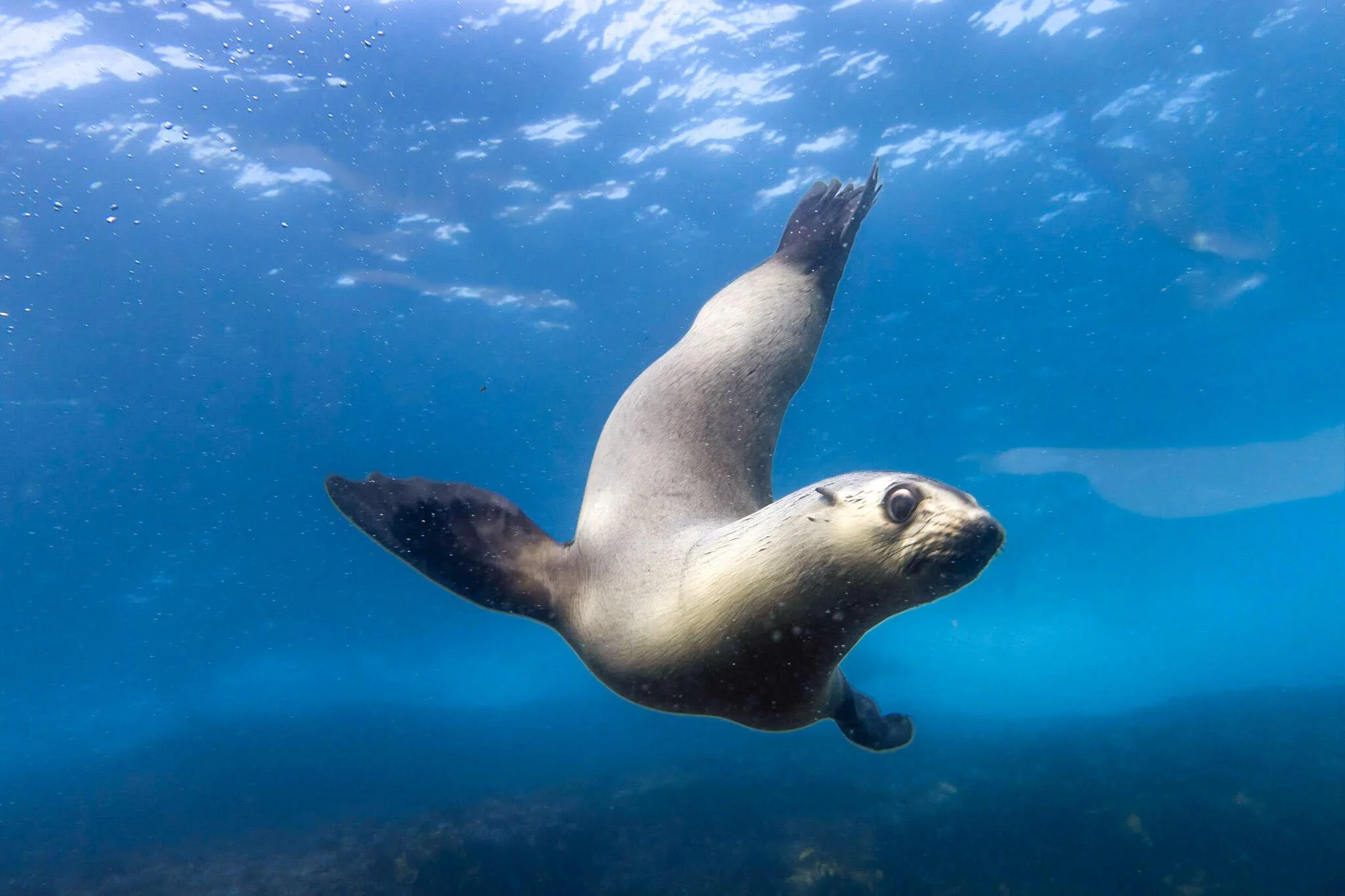
Montague Island Fur seal
Tours from Narooma: Snorkel, Dive, and Island Walks
All seal swims depart from Narooma’s harbour and must be booked with local, authorised tour operators. Several companies offer guided trips with slightly different focuses, but the core experience remains consistent: professional guides taking small groups to swim with one of Australia’s most engaging marine species.
Tour types generally fall into three categories. Snorkel-only seal swims suit first-time visitors and those who prefer to stay at the surface. Scuba diving with seals offers a more immersive experience for certified divers, with single or double dive options available. Combined packages bundle seal time with guided island walks, adding historical context and the chance to see the heritage lighthouse up close.
Snorkel tours typically last around 2.5 to 3.5 hours door-to-door, with 60 to 90 minutes of actual water time around the seal colonies depending on conditions. Scuba diving options require proof of certification (minimum Open Water), though some operators offer Discover Scuba or introductory dives for beginners wanting to explore beneath the surface.
Common Tour Inclusions:
Wetsuit and full snorkel gear hire
Fast boat transfers to and from Barunguba Montague Island
Comprehensive safety and environmental briefing
In-water guide supervision throughout the swim
Hot drinks on board after your swim
Basic photos or videos on some trips
Prices vary by season and operator but are generally regarded as one of Australia’s more affordable wildlife experiences compared to many big-ticket safaris. The combination of accessibility, duration, and quality of encounter represents excellent value for a genuine wild animal experience.
What to Expect on a Typical Seal Swim Trip
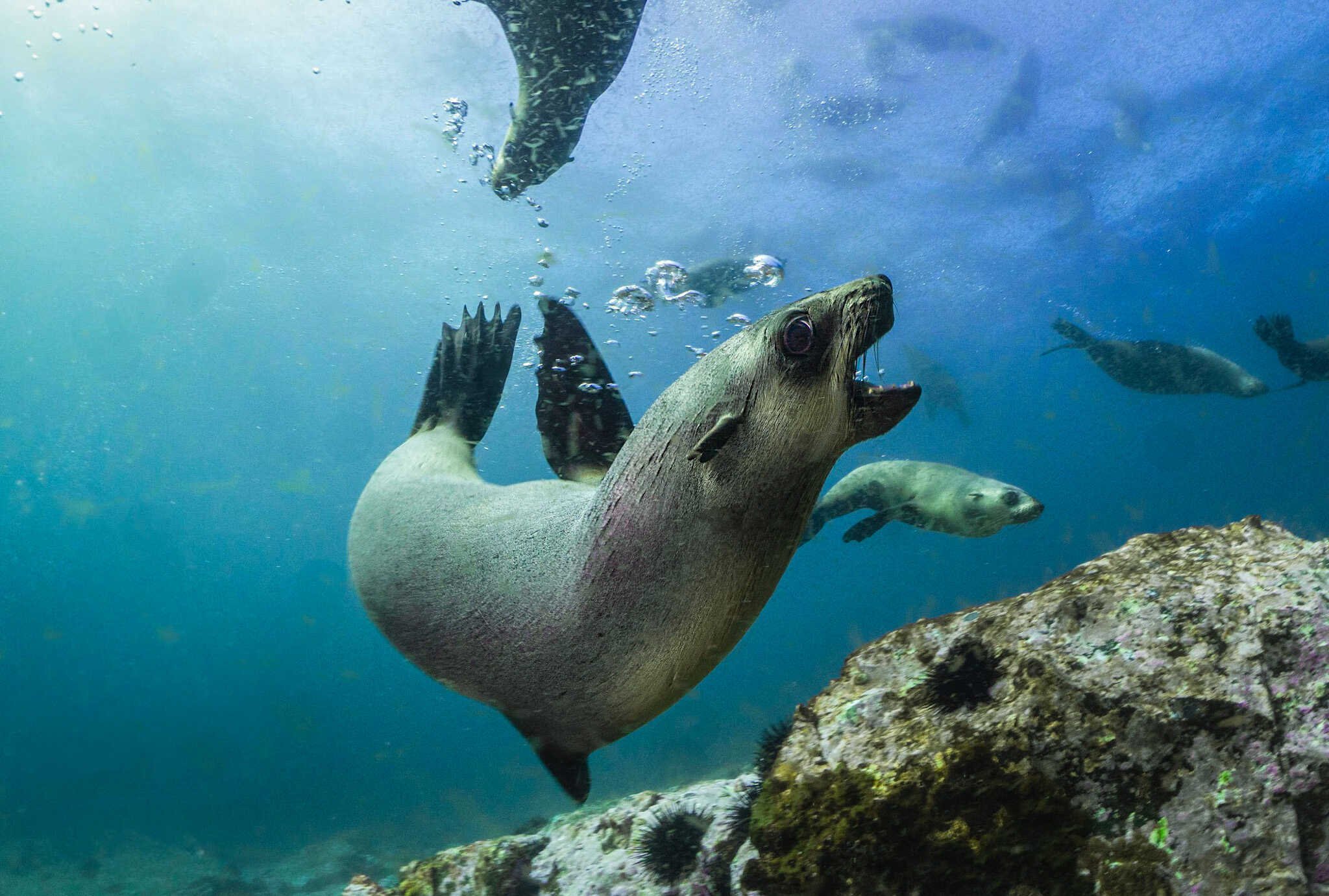
Your adventure begins at Narooma marina, where you’ll check in 30 to 45 minutes before departure. Staff will fit you with a wetsuit and fins, ensuring everything sits comfortably before the safety and environmental briefing covers what to expect in the water.
The boat journey itself is part of the fun. The 20 to 30 minute crossing takes you past the stunning coastline, across Wagonga Inlet bar, and out into open water. Keep your eyes peeled – dolphins often surf the bow wave, seabirds wheel overhead, and during the right season, whales may breach in the distance.
Your skipper chooses a sheltered bay or cove based on wind and swell conditions, then anchors at a legal distance from the main seal haul-outs. Water entry happens via ladders or giant stride, and guests stay near the boat initially while getting comfortable. Guides then lead the group closer to where playful seals are darting and diving.
Total in-water time typically ranges from 1 to 1.5 hours, though you can rest on the boat and re-enter if the cold becomes too much or you simply need a break. The return trip often includes a slow loop past the lighthouse and rocky ledges where seals bask in the sun, offering excellent photo opportunities before heading back to shore.
Gear, Fitness, and Experience Needed
No previous snorkelling experience is strictly required for most seal swim tours, but participants must be able to swim confidently in open water. If you can manage a relaxed 50 to 100 metres in the ocean without panicking, you’ll likely have an amazing experience.
Operators provide thick wetsuits (usually 5mm) to keep guests warm in the sometimes chilly Tasman Sea, along with fins, mask, and snorkel. The wetsuit adds buoyancy, which actually makes floating easier for less confident swimmers. Pool noodles and extra flotation are available for those who need additional support, and guides keep these guests closer to the boat under supervision.
Scuba dives require at least entry-level certification. PADI professionals and dive masters on board can provide refreshers for lapsed divers or those feeling rusty. If you haven’t been underwater in years, let the operator know when booking.
Minimum Requirements and What to Declare:
Ability to swim 50 to 100 metres unaided in open water
Comfortable climbing boat ladders and moving on an unsteady deck
Tolerance for being in the water for up to an hour at a time
Declare any medical conditions (heart, breathing, mobility issues)
Declare medications that may affect water safety
Disclose recent surgeries or physical limitations
Mention if you’re prone to severe seasickness
If in doubt about your fitness level, contact the operator before booking. They’d rather discuss concerns upfront than have someone struggling in the water.
Wildlife Beyond the Seals
While seals are the headline act at Barunguba Montague Island, the waters off Narooma host a remarkable range of other wildlife. Many visitors are surprised by just how much they see beyond the playful fur seals.
Marine Life
Beneath the surface, healthy marine ecosystems support abundant life. Schools of fish dart through the clear water, rays glide across sandy patches, and an occasional turtle cruises past snorkellers. Colourful reef fish move among sponge and soft coral gardens that cling to the rocky substrate. For divers, the underwater landscape reveals even more diversity – cuttlefish, nudibranchs, and the occasional grey nurse shark in deeper waters.
Birdlife
Above the surface, the island and surrounding ocean support impressive birdlife. Barunguba Montague Island hosts around 8,000 Little Penguin nesting burrows, making it one of Australia’s most significant penguin colonies. Shearwaters nest in vast numbers, and gannets, sea eagles, and various terns patrol the skies. The island’s predator-free status makes it critical habitat for these species.
Headline Species and When to Spot Them:
Fur seals: Year round, peak numbers June to October
Little Penguins: Best seen at dusk during breeding season (August to February)
Humpback whales: September to November on southern migration
Dolphins: Year round, often spotted on boat transfers
Sea turtles: Occasional sightings in warmer months
Shearwaters: Summer breeding season (September to April)
Whale Watching Highlights
Humpback whales are most commonly seen off Narooma from about September to November as they migrate south to Antarctica with their calves. These massive creatures often pass close enough to the island that seal tour boats can observe them without diverting far from the main route.
Southern Right Whales occasionally rest in protected bays along the coast but are less predictable than humpbacks. When they do appear, they tend to linger in calm waters, offering extended viewing opportunities from both boats and shore.
Rare but exciting sightings occur throughout the year. Killer Whales (Orcas) have been spotted in the region, and large Ocean Sunfish (Mola Mola) sometimes bask near the surface around Barunguba Montague Island, drawing excited calls from guides and guests alike.
Peak Whale Months and What to Expect:
June to August: Northbound humpback migration begins
September to November: Southbound migration with mothers and calves – best whale watching period
October to November: Highest likelihood of close whale encounters on seal tours
Year round: Chance of rare species like Orcas or Sunfish
Some seal tours operate as opportunistic whale watching trips during spring, slowing down or diverting if whales are spotted nearby. If combining seals and whales is a priority, visit during September to November and mention your interest when booking.
Penguins, Dolphins, and Birdlife
The Little Penguin colony on Montague Island represents one of the largest in New South Wales. Thousands of nesting sites dot the island, including man-made nest boxes installed to protect birds from erosion and predators. While in-water penguin encounters are rare, guests often see penguins from the boat, particularly at dusk when they raft up offshore before coming ashore to their burrows.
Dolphins are frequently encountered on the run to and from the island. Common and bottlenose dolphins regularly surf the bow wave, putting on acrobatic displays for passengers. Note that swimming with dolphins is not offered here to avoid unnecessary disturbance to these animals.
Notable Bird Species:
Little Penguins (largest colony in NSW)
Short-tailed Shearwaters (summer breeding)
White-bellied Sea Eagles
Crested Terns
Ospreys
Australian Gannets
The lighthouse keepers’ cottages on the island offer overnight accommodation, and guests staying after dark may hear and see penguins returning to their burrows – an experience that adds another dimension to any Montague Island tour.
Conservation, Safety, and Environmental Challenges
Conservation Efforts
Barunguba Montague Island is jointly managed for conservation, cultural heritage, and low-impact tourism. Strict limits on access ensure the island’s wildlife can thrive while still allowing visitors to experience its remarkable ecosystems.
The island’s conservation story includes significant restoration efforts. Removal of invasive goats and rabbits in the late 20th century allowed native vegetation to recover, which in turn supported penguin and shearwater populations. The creation of the nature reserve in 1990 formalised protections that have allowed seal numbers to rebuild after near-total extirpation during the 19th century fur trade.
Current environmental challenges include marine debris, particularly plastic that can entangle seals or be ingested by seabirds. Local guides often collect floating rubbish during tours and encourage guests to reduce single-use plastics and follow leave no trace principles both on the island and in the water.
Key Conservation Messages for Visitors:
Avoid single-use plastics during your trip
Don’t remove shells, rocks, or any natural materials
Stay on marked tracks during island walks
Report any entangled wildlife to guides immediately
Dispose of all rubbish properly back on shore
Choose reef-safe sunscreen to protect marine life
Visitor Safety
Safety practices on tours include thorough weather checks, lifejackets on board, emergency equipment, and clear briefings on how to behave around seals and in ocean swell. Operators prioritise both guest safety and wildlife welfare – the two go hand in hand.
Cultural Heritage
The island’s traditional name is Barunguba, and it holds significant cultural importance to local Aboriginal communities of the South Coast region. The island and surrounding waters have been connected to Aboriginal people for thousands of years, and this history adds depth to any visit.
Guided island walks typically include cultural interpretation, with guides sharing stories about traditional use of the island and long-term connections with its marine life. These narratives help visitors understand Barunguba Montague Island as more than just a wildlife destination – it’s a place of enduring significance.
When visiting, stay on marked tracks, don’t remove any natural materials, and listen respectfully when guides share cultural information. Acknowledging Traditional Owners and their continuing connection to land and sea enriches the experience for everyone.
Planning Your Narooma Seals Trip
Narooma is straightforward to reach by car, making it ideal for a long weekend escape or part of an extended South Coast road trip. From Sydney, the drive takes approximately 5.5 hours via the Princes Highway, winding through coastal towns and bushland. From Canberra, you’re looking at around 3 hours through the escarpment country.
Self-driving is the most practical option, with the route taking you through beautiful stretches of New South Wales coastline. Arrive in Narooma township and you’ll find parking near the harbour for those early-morning seal departures. The town itself is compact and easy to navigate.
Book your seal tours well in advance during peak periods. School holidays, long weekends, and the January to February pup season fill up fast. Summer weekends in particular can see tours booked out weeks ahead. Visit during quieter periods (autumn or winter) for more flexibility and smaller group sizes.
At a Glance Planning Details:
Drive time from Sydney: Approximately 5.5 hours
Drive time from Canberra: Approximately 3 hours
Ideal trip length: 2 to 4 nights to allow weather buffer
Book in advance: Essential for school holidays and summer weekends
Accommodation options: Beachfront holiday parks, motels near the inlet, self-contained apartments
Add buffer days: Weather can cause tour rescheduling, especially in winter/spring
Allow at least one extra day in your itinerary beyond your planned seal swim. Ocean conditions can deteriorate quickly, and operators will reschedule if swell or wind makes the trip unsafe or uncomfortable. Having backup time means a cancelled morning doesn’t ruin your entire trip.
What to Pack for a Seal Swim in Narooma
Most gear is supplied by operators, but coming prepared makes the experience more comfortable.
Essential Packing List:
Swimmers to wear under your wetsuit
Towel (a microfibre travel towel works well)
Warm change of clothes for after the swim
Windproof jacket for the boat ride
Hat and sunglasses with a strap
Sunscreen (reef-safe preferred)
Reef-safe zinc for nose and cheeks
Recommended Extras:
Motion sickness tablets (take before departure if prone to seasickness)
Reusable water bottle
Dry bag for valuables, phone, and car keys
GoPro or waterproof camera with wrist strap or float
Beanie and thick socks for winter/spring visits
Puffer jacket for the cold boat ride home after being in the water
If you own your own mask, snorkel, or wetsuit, you may prefer to bring them for better fit and comfort. Check with your operator about whether personal equipment is permitted.
Other Things to Do Around Narooma
Days when you’re not out with the seals offer plenty to explore around Narooma and the surrounding coast. The region rewards those willing to slow down and discover its natural beauty.
Coastal walks wind along clifftops and through bushland, offering views over the turquoise ocean. The Narooma boardwalk follows Wagonga Inlet, perfect for a morning stroll or sunset wander. Local lookouts provide vantage points where you might spot whales during migration season without even leaving shore.
Day-Off Ideas Around Narooma:
Walk the coastal tracks around Narooma headland
Explore nearby beaches at Dalmeny and Mystery Bay
Drive 30 minutes south to the fishing village of Bermagui
Kayak or paddleboard on the calm waters of Wagonga Inlet
Take a scenic drive along the Sapphire Coast
Sample fresh seafood at local cafés overlooking the water
Book a whale watching tour during September to November
Visit Tilba Tilba, a historic village about 20 minutes inland
Combining your seal swim Australia adventure with other nature experiences creates a fuller itinerary. Whether it’s birdwatching, fishing, or simply relaxing on pristine beaches, the region delivers.
Frequently Asked Questions About Narooma Seals
Can anyone swim with the seals? Most tours welcome participants aged 6 or 8 and up, with no upper age limit for those in reasonable health. You must be a confident swimmer able to manage in open water. Non-swimmers can sometimes join as boat passengers to watch from the deck.
What if I’m scared of deep water? Flotation aids like pool noodles are available, and guides keep nervous swimmers closer to the boat. The seals often come into shallow areas near the rocks, so you don’t need to venture into deep water to have close encounters.
Are children allowed? Yes, most operators accept children from around age 6 to 8, depending on swimming ability and maturity. Kids must be confident in the water and able to follow safety instructions. Some tours have minimum age requirements, so check when booking.
Do tours run all year? Yes, seals are present year round and tours operate throughout the year, weather permitting. Peak seal numbers occur in winter and spring, while summer offers warmer water and pup activity.
How much do tours cost? Prices vary by operator and season but typically fall in the low to mid hundreds of dollars for a 3-hour wildlife tour including all gear. Scuba diving options cost more than snorkel-only trips. Combo packages with island walks are also available at higher price points.
Are seal encounters safe? Negative interactions are extremely rare when guests follow guidelines. No chumming or feeding is used to attract the seals – all encounters are natural. Follow crew instructions, don’t chase or touch animals, and the experience is safe for both you and the wildlife.
What about seasickness? Take medication in advance if you’re prone to motion sickness – don’t wait until you feel queasy. Morning departures often have calmer conditions. Focus on the horizon during the boat ride, stay in fresh air, and avoid looking at screens.
Can I bring a GoPro or camera? Action cameras are welcome and encouraged. Secure them with a wrist strap or float attachment to avoid losing them if they slip from your grip. Some operators offer basic photos or video included in tour packages.
Swimming with Narooma seals delivers one of Australia’s most accessible and unforgettable wildlife encounters. These playful, curious animals have been drawing visitors to Barunguba Montague Island for decades, and the experience only gets better as populations continue to recover. Whether you’re a first time snorkeller testing the waters or a seasoned diver looking to add fur seals to your logbook, Narooma offers something truly special on the NSW South Coast.
Book your tour early, pack your sense of adventure, and prepare for an experience you’ll talk about for years. The seals are waiting.
